1. The session — Claude Sonnet, March 2025
The poem went over first without a title, and came back as a single unbroken block of Japanese: the run-on style deliberately preserved so the thoughts tumble into one another the way they do in the English.
On the title. I arrived at "Ephemeral" afterwards and asked for a Japanese equivalent. It proposed 儚さ (hakanasa) — transience — arguing that the word carries the weight of mono no aware, the pathos of impermanence, and would land for a Japanese reader as more than a dictionary match: beauty that is fleeting rather than merely brief. It offered 刹那 (setsuna, a fleeting moment), 泡沫 (utakata, bubbles, evanescence) and 一過性 (ikkasei, transience) as alternatives, and recommended 儚さ. I took it.
Then I sent my notes (in the background note above), and asked what it would change. Four things came back:
- "The call of the wild" had been rendered 野生の呼び声 — literally the cry of the wild. It revised to 原始の誘い, genshi no sasoi, a primal invitation, which carries the pull rather than the noise.
- "Four on the floor" it had already read as the musical 4/4, not the gearbox. Told this was an accident, it recommended keeping the accident.
- "On time for yesterday's call" it had heard as a telephone. Corrected to 昨日の集まり — yesterday's gathering — which lets the joke survive: punctual, and a day late.
- Troubadour it wanted to expand to 中世の吟遊詩人, medieval wandering poet, to carry the history. I said the plain 吟遊詩人 was fine; I didn't want to belabour the line. It dropped it.
It also proposed something I hadn't asked for: opening the Japanese with 誰にも気づかれず、現れては消える人生 — a life that appears and disappears without anyone noticing — my own private definition of the word, welded onto the front of the poem. The Japanese version therefore states its theme in its first breath, where the English never does.
2. A reading — Claude Opus 5, 2026
Revised after the poet supplied his own reading, which is in the background note above. Where the two disagree, his wins; the disagreement is left visible rather than tidied away.
The form is the argument. This poem is one long slide of comma-spliced clauses. Nothing in it is given the pause that would let a reader stop and notice it. That is precisely the poet's definition of ephemeral — to exist, and cease, with hardly anyone noticing — enacted on the page rather than stated. Everything goes past too fast to be seen properly, which is the complaint the poem is making.
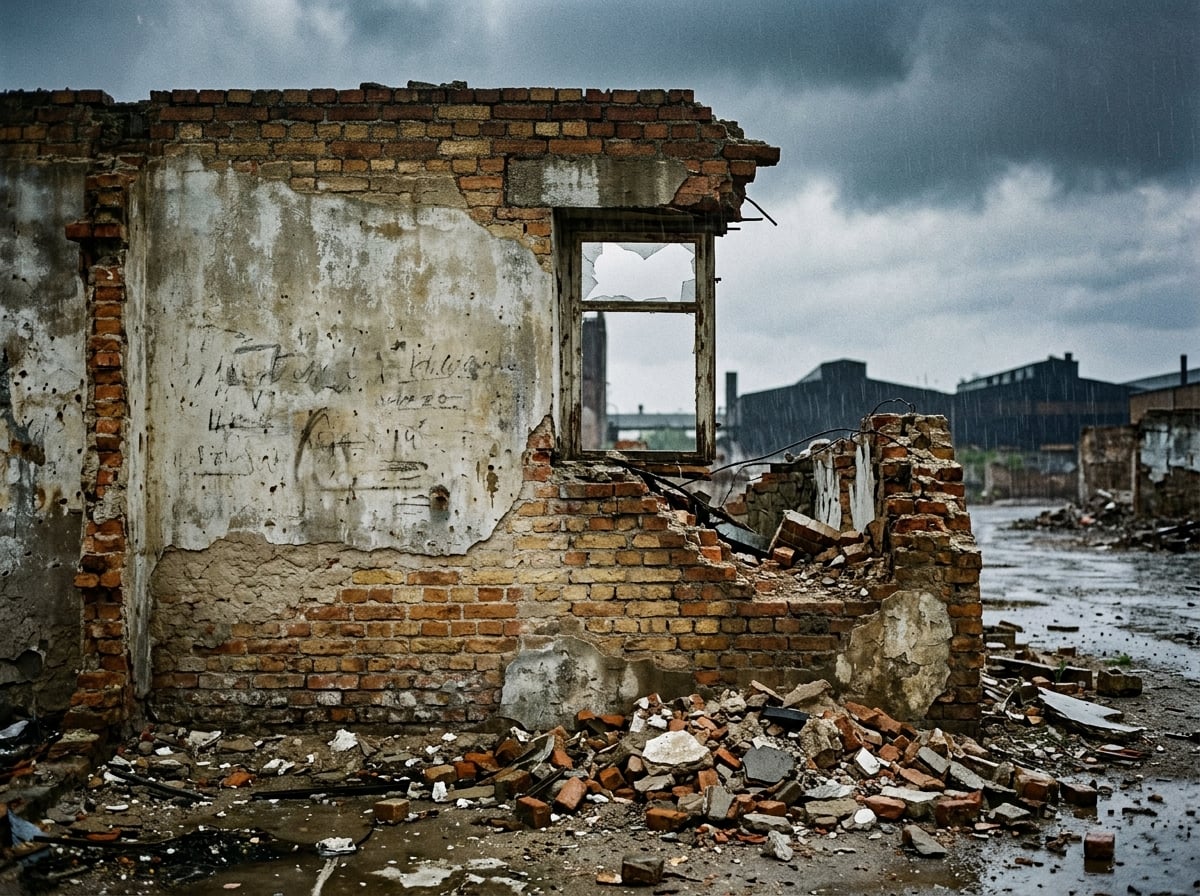
One thing does get its own space. The final stanza breaks away, and what it describes is a man writing on a wall while the wall is being demolished. That is the reversal the poem turns on. The first part is about a woman that life is doing this to. The last part is about a poet doing it deliberately — making something in the certain knowledge that it will not survive, and continuing anyway. Chosen impermanence rather than suffered impermanence.
"Sally J." is the only proper noun in the poem, and my first reading of it was wrong. I took the name as the poem's counter-argument — she was seen, she was named. The poet's note says the opposite: Sally J. is his Jane Doe, deliberately anonymous and not unique. That reading is the better one, and the poem needs it. If she were singular the last stanza could not follow; you cannot write let nothing remain about someone you have just rescued from anonymity. She has to be anyone.
And prototype is closer to right than he allows. Prōtotupos — prōtos, first, plus tupos, the mark left by a blow, the die-stamp. The original sense is not "early version pending improvement" but "the first impression struck, from which the copies come". Sally J. as the die rather than the draft. Only the modern engineering usage has spoiled the word.
What his note opens up is the consolation. He never speaks to her. I know how you feel, I've been spinning my wheels too is not reassurance from someone standing on firm ground; it is a confession offered as comfort, by a man in the same condition, and it happens entirely inside his own head. She never hears a word of it. Which makes the act of empathy the most ephemeral thing in the poem — it exists, it ceases, and nobody notices, not even the person it was for. The definition performed on the reader without announcing itself.
The joke the machine missed. "She's on time for yesterday's call." Punctual, one day late. Six words, and it is the whole character — a woman doing everything correctly and still fractionally out of step with her own life. It is also the funniest line in the poem, and the one most likely to be read straight past.
And the title. The character 儚 is built from 亻, person, and 夢, dream. A person and a dream side by side, meaning fleeting. If the woman is Japanese and the city is a Japanese city, then 儚さ was never a translation decision at all — the poem is going home, and the English was the translation.
Analysis by AI · Claude Sonnet (2025 translation session); Claude Opus 5 (summary and reading)

Responses
No responses yet. Be the first to write one.